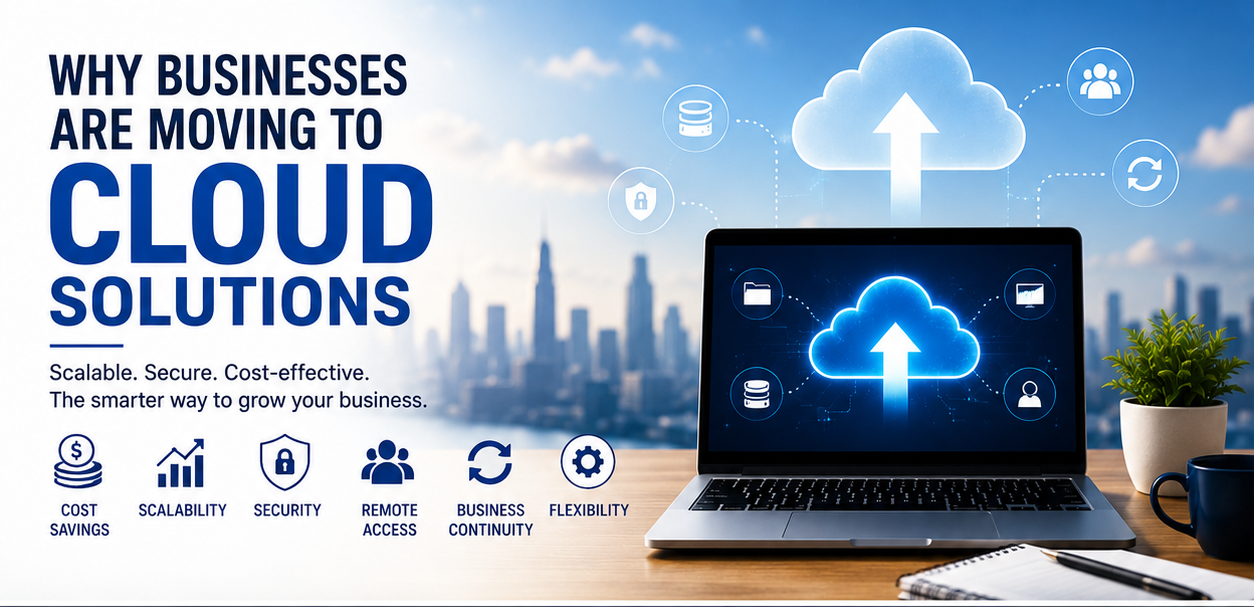
Businesses today are constantly searching for ways to improve efficiency, reduce operational costs, and stay competitive in a fast-changing digital world. One of the biggest technological shifts helping companies achieve these goals is cloud computing. From startups to large enterprises, businesses are increasingly moving their operations, applications, and data to cloud-based solutions.
Cloud solutions allow businesses to access software, storage, and computing resources through the internet instead of relying on traditional physical servers and infrastructure. This modern approach offers flexibility, scalability, and better performance for companies of all sizes.
One of the primary reasons businesses are adopting cloud solutions is cost savings. Traditional IT infrastructure requires significant investment in hardware, maintenance, upgrades, and security. Cloud computing eliminates many of these expenses because businesses only pay for the resources they use. This makes cloud services especially beneficial for small and medium-sized businesses with limited budgets.
Another major advantage is scalability. As a business grows, its technology requirements also increase. Cloud platforms allow companies to quickly scale their resources up or down depending on demand. Whether it’s increasing storage capacity, handling more website traffic, or supporting remote teams, cloud solutions make expansion easier and faster.
Remote accessibility is also driving the shift toward cloud technology. Employees can securely access files, applications, and systems from anywhere using an internet connection. This flexibility supports remote work, improves collaboration, and increases productivity. Teams can work together in real time without being restricted to a physical office location.
Security is another important factor. Many cloud service providers offer advanced security features such as data encryption, automatic backups, multi-factor authentication, and continuous monitoring. These security measures often provide better protection than traditional systems managed internally by small businesses.
Cloud solutions also improve business continuity and disaster recovery. In traditional systems, hardware failures or data loss can cause serious disruptions. Cloud platforms automatically back up data and provide recovery options, helping businesses minimize downtime and maintain operations during unexpected situations.
In addition to operational benefits, cloud computing helps businesses innovate faster. Companies can quickly deploy applications, test new ideas, and adopt emerging technologies without investing heavily in infrastructure. This agility allows businesses to respond more effectively to market changes and customer needs.
Despite its advantages, businesses should carefully plan their cloud migration strategy. Choosing the right cloud provider, ensuring data privacy compliance, and training employees are important steps for successful implementation.
Overall, cloud solutions are transforming how businesses operate. They provide flexibility, security, scalability, and cost efficiency while supporting modern work environments. As digital transformation continues to grow, businesses that adopt cloud technology will be better positioned for long-term success and innovation.