- Posted by : avyaay
- Cybersecurity
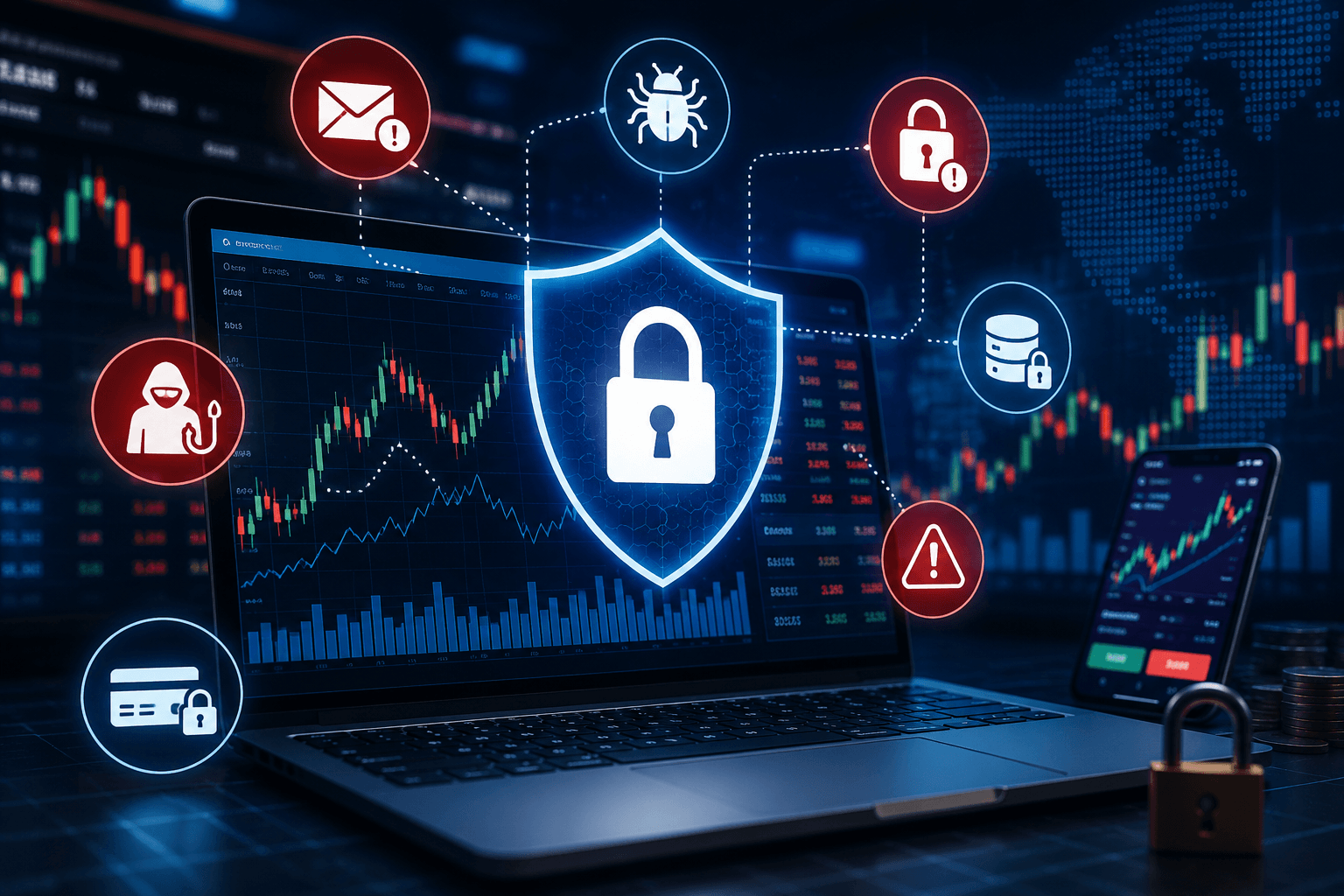
Online trading applications have transformed the financial industry by making stock trading, cryptocurrency exchanges, and investment management accessible to millions of users worldwide. Modern trading platforms provide real-time market analysis, instant transactions, and mobile accessibility, allowing traders to manage investments anytime and anywhere. However, as these applications continue to grow in popularity, cybersecurity threats targeting trading platforms are becoming increasingly sophisticated.
Cybercriminals are constantly searching for vulnerabilities in trading systems to steal sensitive user data, manipulate transactions, or disrupt financial operations. A single security breach can result in massive financial losses, reputational damage, and legal consequences for trading companies. This is why cybersecurity has become one of the most critical aspects of online trading application development.
1. Phishing Attacks and Credential Theft
One of the most common cybersecurity risks in online trading applications is phishing attacks. Cybercriminals create fake websites, emails, or login pages that closely resemble legitimate trading platforms. Their primary goal is to trick users into sharing account credentials, banking details, or two-factor authentication codes.
Once attackers gain access to user accounts, they can perform unauthorized trades, withdraw funds, or steal personal information. Trading companies must implement advanced email filtering, domain protection, and multi-factor authentication (MFA) to reduce the risk of phishing attacks.
2. API Vulnerabilities
Most modern trading applications rely heavily on APIs to connect with third-party financial services, payment gateways, and market data providers. While APIs improve functionality and scalability, poorly secured APIs can become a major security risk.
Attackers may exploit weak authentication mechanisms, exposed API keys, or insecure endpoints to gain unauthorized access to trading systems. To protect against these threats, companies should use secure API authentication methods, encryption, rate limiting, and continuous API monitoring.
3. Distributed Denial-of-Service (DDoS) Attacks
Online trading platforms require high availability and real-time performance. DDoS attacks target this requirement by overwhelming servers with massive amounts of traffic, causing systems to slow down or completely crash.
For traders, even a few minutes of downtime during market hours can result in significant financial losses. Companies can reduce the impact of DDoS attacks by using cloud-based security services, traffic filtering systems, load balancing, and scalable infrastructure solutions.
4. Data Breaches and Financial Information Theft
Trading applications store highly sensitive information, including personal details, bank account information, transaction history, and financial records. Hackers often target these databases to steal valuable data for fraud or black-market sales.
Data breaches can damage customer trust and lead to strict regulatory penalties. Implementing strong encryption, secure database management, access control policies, and regular security audits is essential for protecting sensitive financial data.
5. Malware and Ransomware Attacks
Malware attacks continue to be a major threat in the financial technology sector. Cybercriminals may use malicious software to steal information, monitor user activity, or lock trading systems through ransomware attacks.
Ransomware can completely shut down trading operations until a ransom payment is made. Businesses should deploy advanced endpoint protection, regular system updates, employee cybersecurity training, and automated backup solutions to minimize these risks.
6. Weak Authentication Systems
Many security breaches occur because of weak passwords or outdated authentication systems. If users reuse passwords or companies fail to implement strong login security, attackers can easily compromise accounts through brute-force attacks or credential stuffing.
Multi-factor authentication, biometric verification, password complexity requirements, and account activity monitoring can significantly improve account security.
7. Insider Threats
Not all cybersecurity threats come from external hackers. Employees, contractors, or partners with system access may intentionally or accidentally expose sensitive information. Insider threats can lead to data leaks, unauthorized transactions, or infrastructure vulnerabilities.
Trading companies should implement strict role-based access control, employee monitoring systems, and internal cybersecurity policies to reduce insider risks.
The Importance of Proactive Cybersecurity
As online trading platforms continue evolving, cybersecurity must remain a top priority for businesses in the financial technology industry. Modern cyber threats are becoming more advanced, making proactive security strategies essential for long-term success.
Companies that invest in secure infrastructure, regular security testing, real-time threat monitoring, and employee awareness programs can better protect their platforms and customers from cyberattacks. A secure trading environment not only protects financial assets but also builds customer trust and business credibility in an increasingly competitive digital market.
Final Thoughts
Cybersecurity is no longer optional for online trading applications. From phishing attacks and API vulnerabilities to ransomware and insider threats, trading platforms face a wide range of security challenges every day. Businesses that prioritize cybersecurity can reduce operational risks, improve customer confidence, and maintain stable trading operations even in the face of evolving cyber threats.
As the financial technology sector grows, organizations must continuously update their cybersecurity strategies to stay ahead of attackers and ensure the safety of users and financial transactions.
- 0 Comments
- cybersecurity
- fintech-security
- trading-applications