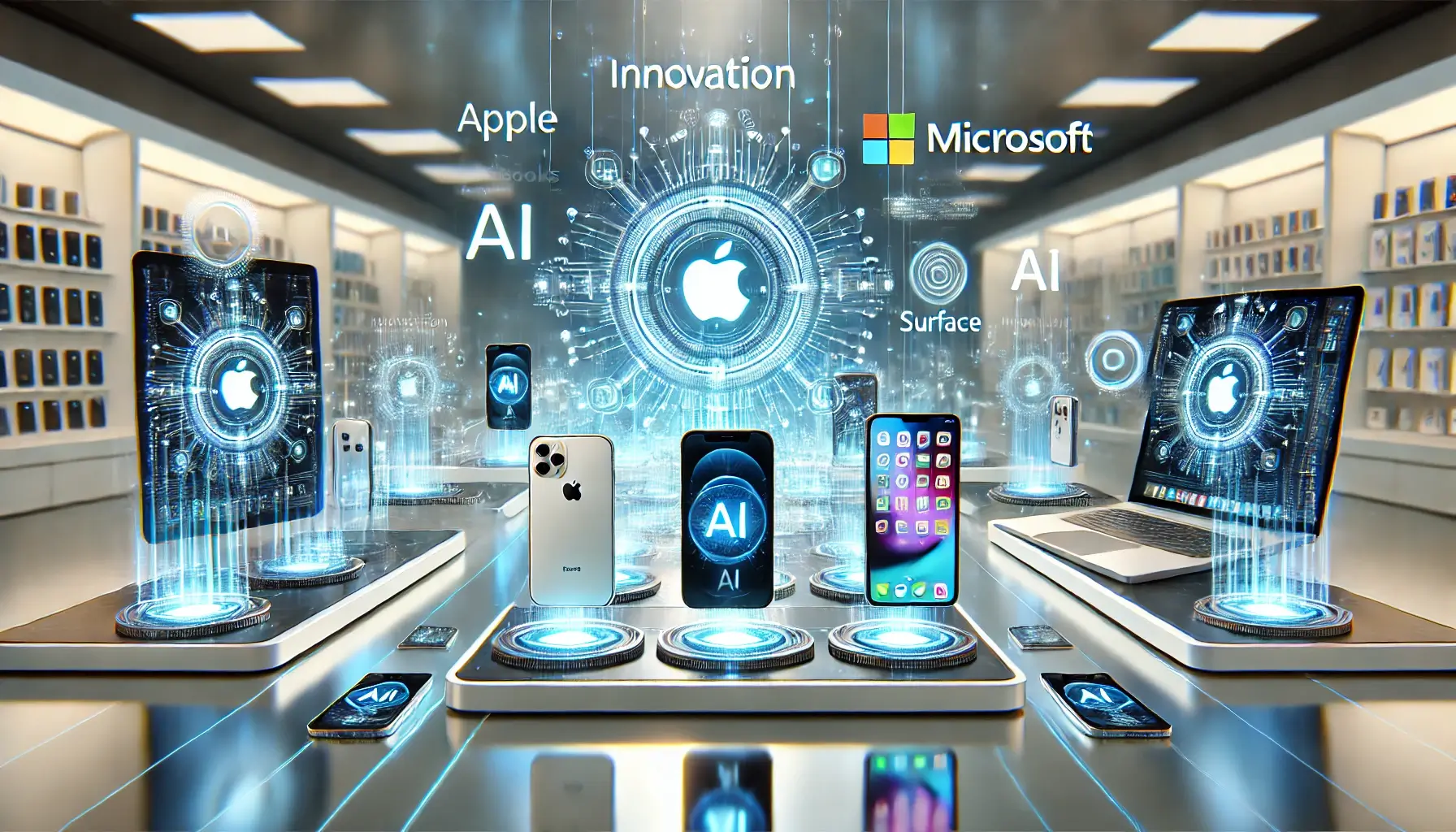
How Apple is Leading the AI Revolution: A Comparative Insight
Artificial Intelligence (AI) has become the battleground for tech giants vying for dominance in the ever-evolving digital landscape. Microsoft made the first move by integrating AI with its Copilot+ initiative, leveraging OpenAI’s technology to bring AI features to devices. However, executional missteps have opened the door for competitors like Apple and Google to close the gap and, in some cases, take the lead.
Apple's latest "Apple Intelligence" initiative, combined with innovative user engagement strategies, showcases a sharper focus on usability and adoption compared to Microsoft's Copilot+. Here’s how Apple is shaping up to redefine AI for its ecosystem and what businesses can learn from this shift.
Microsoft’s Missed Opportunity
Microsoft’s Copilot+ launched with promising AI features like Cocreator and Recall, aimed at enhancing productivity through AI-driven tools. However, security concerns around Recall led to its withdrawal, leaving Cocreator—essentially a Dall-E implementation running locally—as the primary feature. Compounding the issue was Microsoft’s decision to target these features exclusively to devices with Snapdragon X processors, catering to users focused on portability rather than performance or innovation.
This limited focus alienated key market segments, including gamers, performance users, and workstation professionals—groups more likely to adopt cutting-edge technologies. Without a clear strategy to engage users and address security concerns, Microsoft’s efforts fell flat.
Apple’s Superior AI Strategy
Apple’s approach to AI integration stands out for its inclusivity and accessibility. By rolling out AI tools across its entire ecosystem—desktops, laptops, and smartphones—Apple ensures that more users can experience and benefit from its innovations.
The standout aspect of Apple’s strategy is its commitment to user education. The company introduced 15-minute AI sessions in Apple Stores, allowing customers to interact with Apple Intelligence tools firsthand. This not only demystifies AI for users but also fosters a deeper understanding of its practical applications.
By focusing on accessibility and engagement, Apple bridges the gap between advanced technology and everyday usability. This ensures a faster adoption rate compared to Microsoft's more segmented and less user-centric strategy.
The Importance of Usability in AI Adoption
A recurring challenge in AI adoption is user inertia. People tend to stick with familiar workflows, making it difficult for companies to encourage the use of new features, even when they offer clear advantages. This was evident in Microsoft’s handling of Copilot+, where poor communication about the benefits and limited device compatibility hindered user engagement.
Apple, on the other hand, focuses on creating experiences that seamlessly integrate AI into users’ routines. Its tools are not just technologically advanced but also intuitive, aligning with the company's long-standing reputation for user-friendly innovation.
A Historical Parallel: Internet Explorer vs. Chrome
This AI race echoes the browser wars of the past. Microsoft’s Internet Explorer initially dominated the market by outmaneuvering Netscape Navigator. However, Microsoft’s decision to defund IE paved the way for Google Chrome to capture market share. Today, Chrome’s dominance underscores the importance of consistent innovation and user-focused strategies—lessons Microsoft appears to have overlooked with Copilot+.
The Competitive Landscape
While Apple has taken the lead in creating a more user-friendly AI experience, Google is also advancing its AI tools across platforms. Unlike Microsoft’s restrictive Copilot+ rollout, Google’s approach focuses on accessibility and integration, making it a formidable contender in the AI race.
Microsoft’s cloud-based AI efforts remain strong, but its failure to deliver an effective desktop AI solution highlights the risks of poor execution. Meanwhile, Apple’s ability to combine cutting-edge technology with practical usability positions it as a potential disruptor in the market.
Conclusion
The race for AI dominance illustrates that being first to market is not enough—execution is key. Microsoft’s Copilot+ initiative stumbled due to limited accessibility, security concerns, and a lack of user engagement. In contrast, Apple’s inclusive rollout and focus on user education are driving faster adoption and creating a more impactful AI experience.
As the AI landscape continues to evolve, businesses must prioritize usability, accessibility, and customer engagement to stay competitive. Apple’s success with Apple Intelligence serves as a reminder that technology must serve users, not just innovation for innovation's sake.