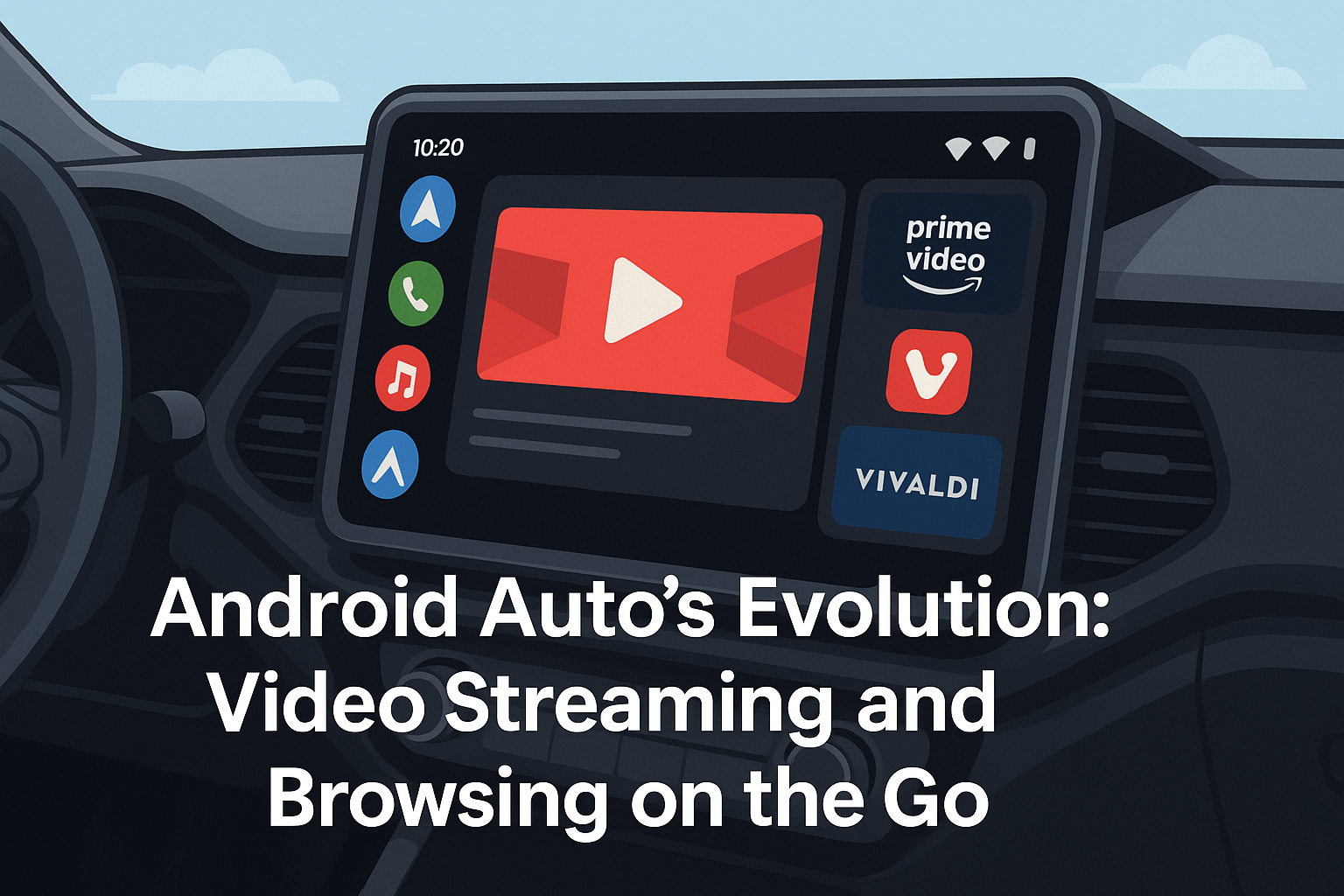
Android Auto’s Evolution: Video Streaming and Browsing on the Go
Android Auto, Google's in-car smart interface, has undergone significant changes since its launch — but 2025 marks one of its most transformative upgrades yet. Once limited to basic navigation and music controls, Android Auto is now entering a new era, offering drivers and passengers video streaming and web browsing capabilities directly from their vehicle's infotainment screen.
This update isn't just a tech novelty — it's part of a larger strategy by Google to turn the car into an entertainment and productivity hub, especially as the automotive industry races toward smarter, semi-autonomous vehicles.
What's New in Android Auto?
In a recent announcement at Google I/O 2025, Google confirmed that Android Auto will now support:
YouTube video playback
Amazon Prime Video streaming
Web browsing via the Vivaldi browser
Smart home controls
New productivity integrations (like Google Calendar and Gmail previews)
These updates are already rolling out to select models from Polestar, Volvo, Ford, and Honda, with wider availability expected later in the year.
How It Works
These features are only enabled while the vehicle is parked, addressing concerns about driver distraction. The user interface adapts to the screen size and supports touch navigation, voice control (via Google Assistant), and limited multi-tasking. For example, you can browse your email while the car is charging or watch a tutorial video while waiting to pick someone up.
All content runs via Google Play apps on the vehicle’s infotainment system, meaning the experience is optimized for larger screens and built-in connectivity.
Why This Matters
This evolution of Android Auto is not just about convenience — it represents a shift in how car manufacturers and tech companies envision in-vehicle time. As EV adoption grows and more time is spent charging rather than fueling up, drivers and passengers need better in-car experiences.
By enabling streaming and browsing, Google is tapping into that downtime and expanding Android Auto’s use case from “driver assistant” to “entertainment console.”
It’s also a direct response to competitor platforms:
Apple’s CarPlay is also expected to launch a more immersive version with deeper system integrations.
Tesla's infotainment system has long supported video apps and a native web browser.
Now, Google is making sure Android Auto doesn't fall behind.
Safety First
Despite the new features, Google remains firm on safety protocols:
Streaming and browsing are disabled once the car is in motion.
Parental controls are built-in for family-friendly setups.
Google Assistant continues to be central for hands-free control.
This balance ensures Android Auto remains compliant with international road safety regulations, while still enhancing the user experience during idle times.
What’s Next?
Looking forward, Google has hinted at future AI integrations, such as:
Smart trip summaries
Proactive reminders based on calendar and location
Suggested stops with real-time reviews
As vehicles become more connected, expect Android Auto to blur the lines between mobile computing and automotive tech even further.
Final Thoughts
Android Auto’s new video and browsing capabilities mark a major step forward in in-car technology. It caters to today’s always-connected users who expect the same content access in their vehicle as they have on their phone or tablet — especially during idle moments.
For tech-savvy drivers, families on road trips, or professionals using EVs as mobile offices, Android Auto is no longer just a utility — it’s becoming an experience.
If you're considering a new vehicle this year, check for Android Auto compatibility — your next drive could feel a lot more like your living room.