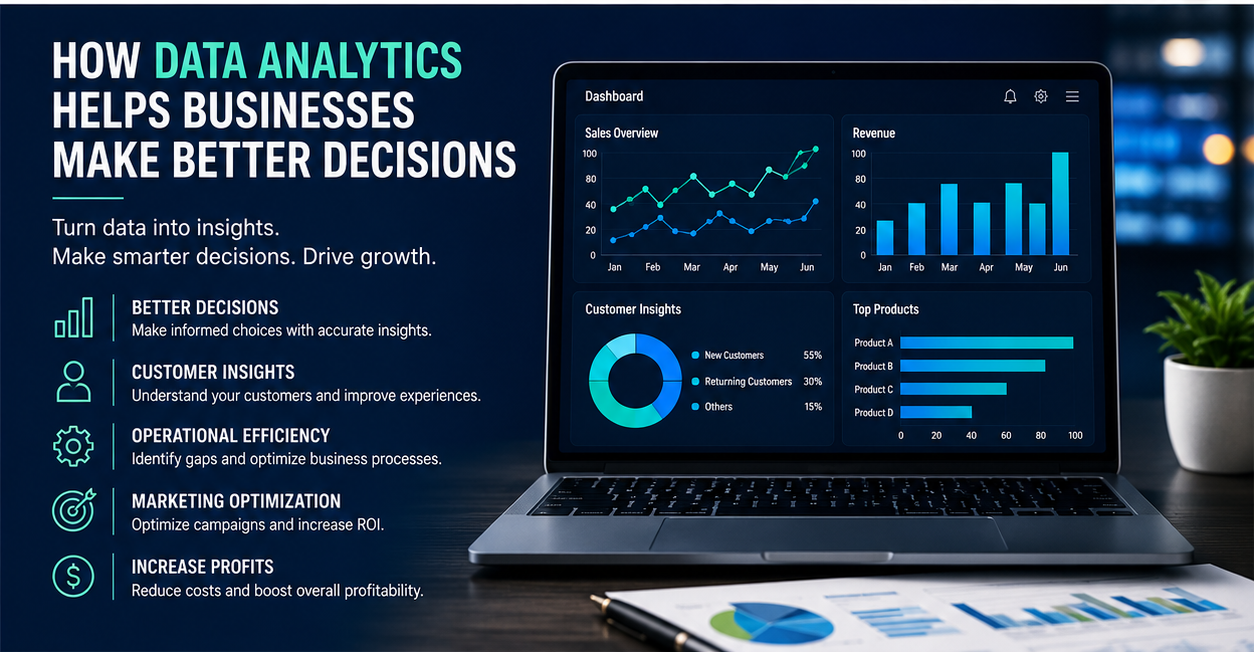
In today’s digital world, businesses generate massive amounts of data every day. From customer interactions and website traffic to sales reports and marketing campaigns, data is everywhere. However, collecting data alone is not enough. The real value comes from analyzing that information and turning it into meaningful insights. This is where data analytics plays a critical role.
Data analytics is the process of examining data to identify patterns, trends, and useful information that can help businesses make smarter decisions. Companies across industries are using data analytics to improve performance, increase profits, and better understand their customers.
One of the biggest benefits of data analytics is improved decision-making. Instead of relying on assumptions or guesswork, businesses can make decisions based on accurate information and real-time insights. This helps reduce risks and increases the chances of success.
Customer understanding is another major advantage. Data analytics allows businesses to analyze customer behavior, preferences, and buying patterns. By understanding what customers want, companies can create more personalized products, services, and marketing campaigns. This leads to higher customer satisfaction and stronger brand loyalty.
Data analytics also helps businesses improve operational efficiency. By monitoring workflows and performance metrics, companies can identify areas where time and resources are being wasted. This allows them to optimize processes, reduce costs, and increase productivity.
In marketing, data analytics provides valuable insights into campaign performance. Businesses can track website visits, social media engagement, conversion rates, and customer responses. This information helps marketing teams understand which strategies are working and which need improvement. As a result, businesses can allocate budgets more effectively and achieve better returns on investment.
Sales forecasting is another important use of data analytics. By analyzing historical data and market trends, businesses can predict future demand and customer behavior. This helps companies plan inventory, manage resources, and prepare for business growth.
Data analytics also supports better financial management. Businesses can monitor revenue, expenses, and profitability more accurately. Detailed financial insights help organizations identify opportunities for growth while minimizing unnecessary spending.
Another growing advantage of data analytics is real-time reporting. Modern analytics tools provide dashboards and live reports that help businesses respond quickly to changes and make faster decisions. This level of agility is becoming increasingly important in competitive markets.
While data analytics offers many benefits, businesses must ensure that data is accurate, secure, and properly managed. Using reliable tools and maintaining data privacy are essential for gaining trustworthy insights.
In conclusion, data analytics is helping businesses transform raw information into strategic advantages. Companies that use data effectively can make smarter decisions, improve customer experiences, optimize operations, and achieve long-term growth. In a data-driven world, analytics is no longer optional — it is a key part of modern business success.