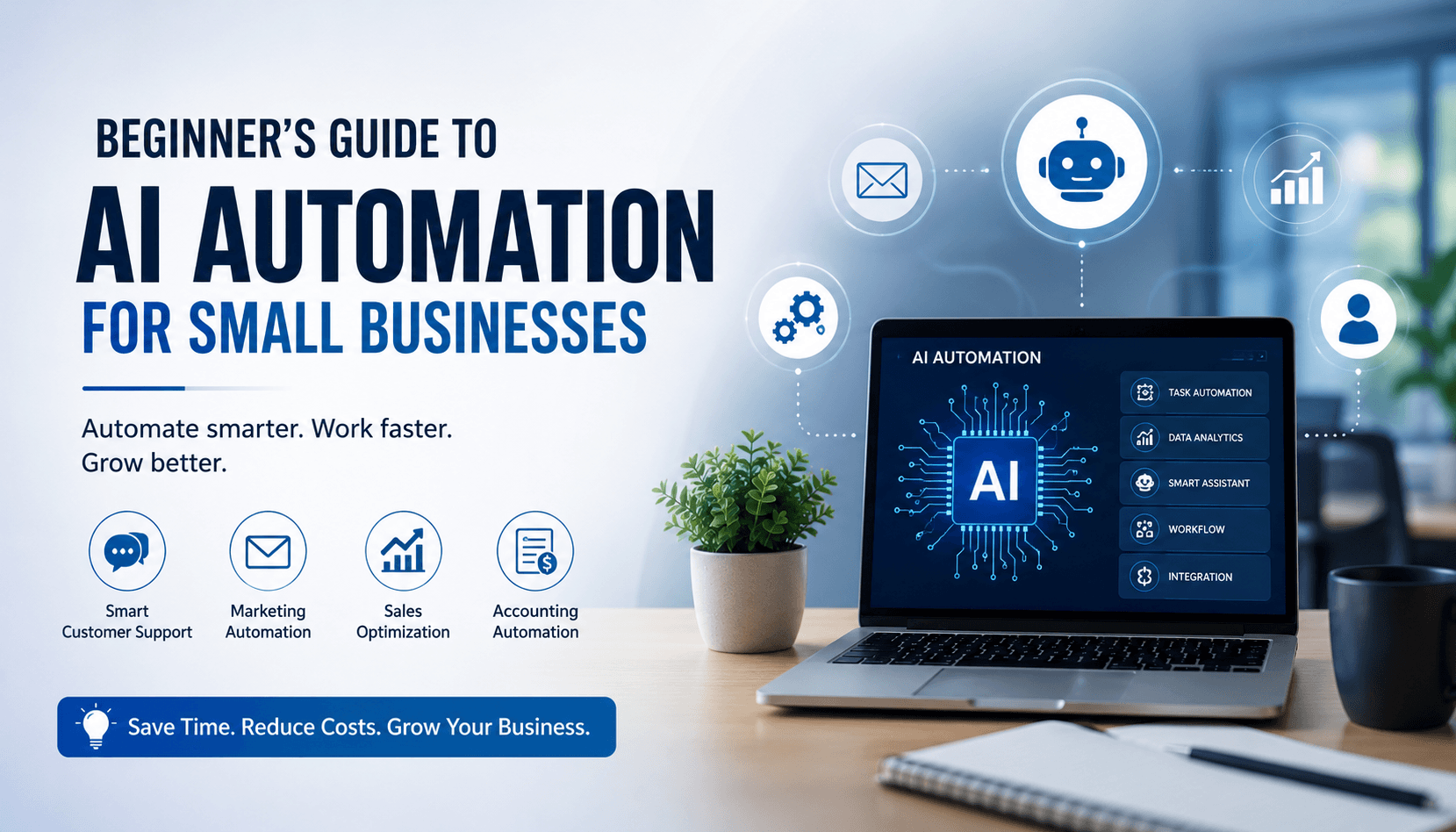
In 2026, artificial intelligence (AI) is no longer a luxury reserved for large corporations. Small businesses are rapidly adopting AI automation to improve efficiency, reduce costs, and stay competitive. If you’re new to this space, this guide will help you understand what AI automation is and how you can start using it in your business.
What is AI Automation?
AI automation refers to using intelligent software systems to perform tasks that typically require human effort. Unlike traditional automation, AI systems can learn from data, adapt to new situations, and make decisions. This makes them highly effective for handling repetitive and time-consuming processes.
For small businesses, this means you can automate tasks like customer support, data entry, marketing campaigns, and even sales processes without hiring additional staff.
Why Small Businesses Should Use AI Automation
One of the biggest advantages of AI automation is cost savings. By automating routine tasks, businesses can reduce labor costs and minimize human errors. AI also works 24/7, ensuring that your operations continue even outside business hours.
Another key benefit is improved productivity. Employees can focus on more strategic and creative work instead of repetitive tasks. This leads to better overall performance and faster business growth.
AI also enhances customer experience. For example, chatbots can instantly respond to customer queries, improving satisfaction and engagement.
Common Use Cases of AI Automation
Small businesses can apply AI in several practical ways:
- Customer Support: AI chatbots can handle frequently asked questions and basic support requests.
- Marketing Automation: Tools can send personalized emails, manage social media posts, and analyze campaign performance.
- Sales Optimization: AI can track leads, predict customer behavior, and suggest the best time to follow up.
- Accounting and Finance: Automating invoicing, expense tracking, and reporting saves time and reduces errors.
How to Get Started
Starting with AI automation doesn’t have to be complicated. Begin by identifying repetitive tasks in your business that consume time and resources. These are the best candidates for automation.
Next, choose tools that fit your business needs and budget. Many AI-powered platforms are affordable and designed specifically for small businesses.
It’s also important to start small. Implement one or two automation processes first, measure the results, and then expand gradually. This approach reduces risk and helps you understand what works best.
Challenges to Consider
While AI automation offers many benefits, it’s not without challenges. Initial setup can take time, and there may be a learning curve for your team. Data privacy and security are also important factors to consider when choosing tools.
However, with the right planning and guidance, these challenges can be managed effectively.
Final Thoughts
AI automation is transforming how small businesses operate. By adopting the right tools and strategies, you can save time, reduce costs, and deliver better experiences to your customers.
The key is to start early, stay consistent, and continuously adapt to new technologies. Businesses that embrace AI today will be better positioned for success in the future.