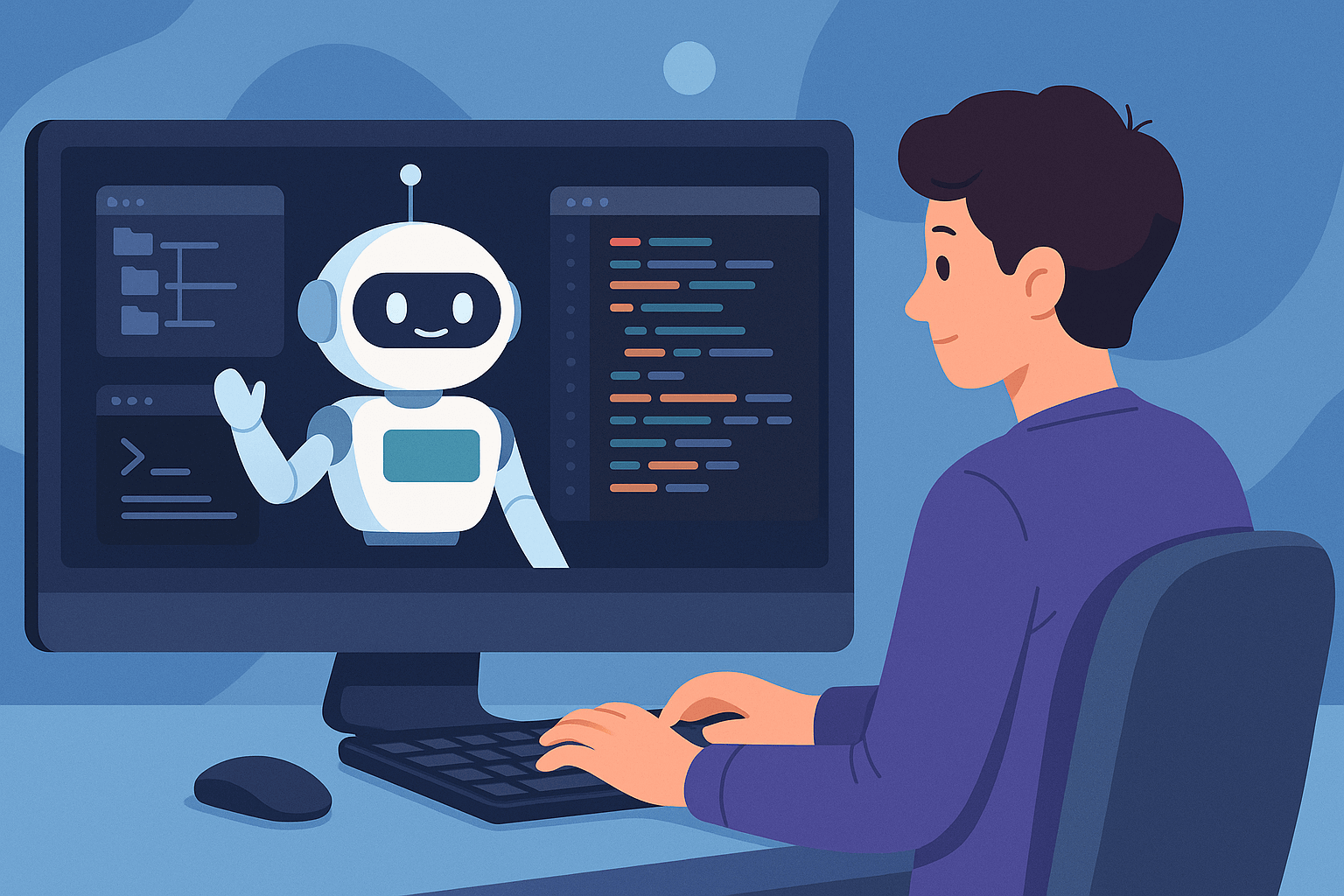
Meet Codex: OpenAI’s New Agentic Coding Partner
OpenAI has just unveiled Codex, a groundbreaking agentic, web-based coding tool aimed at professional developers. This cloud-native agentic assistant—available now as a research preview to ChatGPT Pro, Team, and Enterprise users—transforms AI-generated code into actionable, testable, and transparent outcomes.
What Is Codex?
Operating within ChatGPT’s web interface, Codex offers much more than code completion. It runs in its own secure virtual environment (“mini‑computer”), where it can:
Navigate your project directory structure
Execute commands such as linters and tests
Write, debug, and propose code changes autonomously
Provide commit-ready patches with logs and test results attached
Powered by codex‑1 (a variant of OpenAI's o3 series fine‑tuned for software engineering), the tool supports parallel task handling and interactive oversight.
Why It Matters
Here's what makes Codex a game‑changer:
Professional focus vs. “vibe coding”
While vibe coding tools (prompt-based assistants) handle quick code snippets, Codex is engineered for larger-scale, test-driven, and professional workflows.Safer, more explainable work
It clearly logs each step, showing terminal output and test results—letting engineers track exactly what the agent did.Enhanced developer productivity
Early adopters like Cisco, Temporal, Superhuman, and Kodiak already use Codex for automating chores like bug fixes and feature development.Strategic timing amid competition
OpenAI released Codex just before Google’s annual I/O event, likely to secure a competitive edge. Reports also indicate OpenAI is negotiating to acquire Windsurf (formerly Codeium) for around $3 billion.
Under the Hood
Isolated sandbox per task: Codex runs each prompt in a confined sandbox, ensuring actions don't affect production until reviewed.
Test-driven iteration: It doesn’t stop at code generation—it runs tests and refines until tasks pass all checks .
Human-aligned style: Trained to produce clean patches that match typical human coding patterns.
Security-first design: Confined to a sandbox with whitelisted dependencies; designed to refuse attempts to write malicious code .
What’s Next
OpenAI plans to extend availability to ChatGPT Plus and educational tiers, with ongoing enhancements:
Internet access for sandbox environments in later builds
More advanced multi-step autonomy—allowing Codex to manage complex workflows with minimal oversight
Meanwhile, industry analysts note this marks a shift from interactive coding assistants toward agent-driven, autonomous developer tooling
What This Means for IT Companies
Streamlined workflows: Automate test-suite execution, bug detection, and pull‑request setup—all within one unified interface.
Team scalability: Codex handles repetitive grunt work, freeing senior engineers to focus on architecture and innovation.
Maintainability: Better documentation through logs and sandbox records reduces onboarding friction and improves traceability.
Conclusion
OpenAI’s Codex signals a major evolution in developer tooling: from assistance to agency. By offering multi-step, test-integrated, sandboxed tasks, Codex acts as a reliable virtual teammate—pushing the boundary of where AI fits in modern software workflows. For IT companies, it's an opportunity to redefine productivity and quality control using AI responsibly.